
WELCOME BONUS 300%
UP TO €2000 + 100
FREE SPINS
UP TO €2000 + 100
FREE SPINS
Home → Blackjack
Blackjack at Slotino Casino: Variants, Rules and Payouts
Bonus conditions often exclude Blackjack completely
The 300% welcome bonus up to €2,000 plus 100 free spins imposes strict contribution rules on table games. Tischspiele contribute only 10% toward the wagering requirement, which drastically reduces the effective value for high rollers compared to slots at 100%. This low percentage means that a €1,000 bet on Blackjack only counts as €100 toward the turnover target. Players must therefore generate significantly more volume to clear the bonus funds attached to their deposit.
Blackjack variants like Liberal Vegas Strip offer an RTP of 99.72% and a house edge of just 0.28%, making them mathematically favorable. However, the 10% contribution rate effectively doubles the real cost of playing these games against the bonus terms. A standard deviation of 1.15 indicates moderate volatility, but the bonus restriction overrides any strategic advantage available to the player. The casino retains control by limiting how quickly high-limit players can convert bonus money into withdrawable cash.
Standard Blackjack with six decks and S17 rules yields an RTP of 99.54% with a house edge of 0.46%. When combined with the 10% game contribution, the effective house edge against the bonus requirements rises substantially. High rollers betting €1,000 per hand see only €100 count toward the rollover, extending the time required to meet obligations. This structure discourages heavy play on tables where the mathematical expectation is most positive for the player.
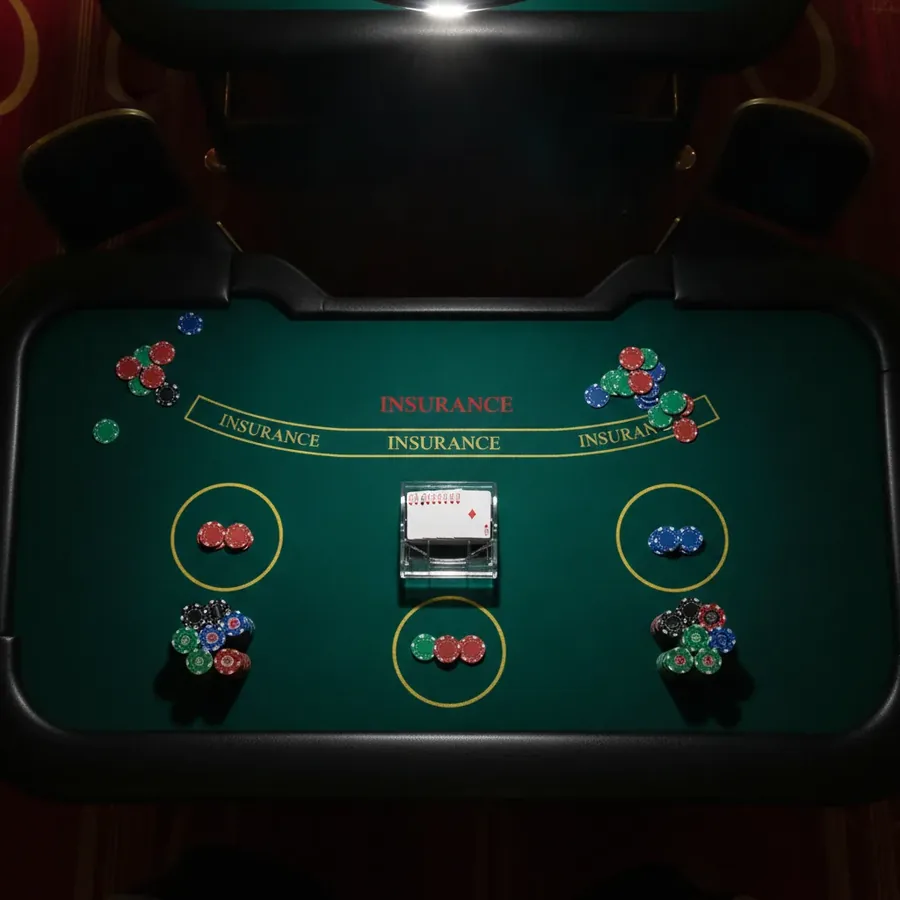
Shoe, Cut Card, and 75 Percent Penetration
High stakes blackjack typically utilizes multiple decks, such as the six-deck variant offering an RTP of 99.54%. The penetration depth determines how many cards are dealt before reshuffling, directly impacting card counting effectiveness. Players relying on advanced strategies must consider how deck composition changes throughout the hand distribution cycle.
Liberal Vegas Strip rules provide a superior RTP of 99.72% with a minimal house edge of 0.28%. This variant features liberal rules including resplitting and late surrender, which further reduce the casino's advantage. The standard deviation of 1.15 suggests predictable variance for high rollers managing substantial bankrolls. Understanding these specific rule sets is crucial for calculating expected returns over long playing sessions at these limits.
Single deck blackjack offers the best RTP of 99.85% with a house edge of only 0.15%. Fewer decks significantly lower the casino's mathematical advantage compared to eight-deck games. However, single deck games often compensate with less favorable payout structures or stricter betting limits. High rollers must weigh the slight edge improvement against potential restrictions on maximum bet sizes available at these tables.
Which table limits suit 20 EUR balance?
Live dealer options like Evolution's Blackjack Party accept minimum bets starting from 1.00 EUR. This low entry point allows players with small balances to participate in high-energy table environments. The maximum limit reaches 1,000 EUR, accommodating significant wagers once the bankroll grows. Such flexibility ensures that even modest initial deposits can access premium live streaming experiences.
Playtech's Quantum Blackjack Plus Live requires a minimum stake of 1 EUR with a cap of 5,000 EUR. This range provides ample room for progression strategies without immediate risk of hitting table limits. The inclusion of quantum multipliers up to 1,000x adds excitement to standard gameplay mechanics. Small balances can thus engage with high-variance features while maintaining manageable exposure per round.
Evolution's Lightning Blackjack starts at 1 EUR and goes up to 2,500 EUR per hand. Unlimited player capacity ensures availability regardless of peak traffic times. The lightning multipliers up to 25x on winning hands offer occasional large payouts from small stakes. These limits make it accessible for players testing strategies with limited funds before scaling up.
Side Bets don't count towards bonus turnover
Insurance bets in six to eight deck games carry an RTP of 92.53% and a house edge of 7.47%. These side wagers pay 2:1 but significantly erode overall profitability due to the high house advantage. Crucially, side bets do not contribute to bonus wagering requirements, isolating them from the main gameplay loop. Players placing insurance waste both funds and progress toward clearing promotional credits simultaneously.
Surrender options, specifically late surrender, improve RTP by approximately 0.08 percentage points by returning 50% of the bet. This rule modification benefits players holding weak hands against strong dealer upcards. However, since side-related actions often fall outside primary contribution metrics, utilizing surrender strategically does not aid bonus clearance. The financial benefit remains isolated from the promotional turnover calculation entirely.
Splitting and doubling actions are core strategic elements but do not constitute separate side bets contributing to turnover. Basic strategy dictates doubling after split in favorable situations to maximize expected value. Yet, the 10% contribution rate for table games already penalizes all blackjack activity equally. Adding side bet exclusions further restricts how players can optimize their bonus usage across different game aspects.
Place Side Bet before cards are dealt
Insurance becomes available when the dealer shows an ace, requiring a decision before additional cards are drawn. This side bet pays 2:1 but carries a steep house edge of 7.47% in six to eight deck shoes. Placing this wager early locks in the odds based solely on the probability of the dealer having ten-value cards. Strategic avoidance is generally recommended unless counting cards indicates a favorable true count.
Lightning Blackjack introduces multiplier rounds that activate before the main hand outcome is determined. These features enhance standard gameplay by offering potential wins up to 25x on regular hands. Players must commit to their initial bets before these random enhancements are applied to specific cards. This timing ensures fairness while adding an element of unpredictability to each round's potential payout structure.
Quantum Blackjack Plus employs multipliers up to 1,000x on three-card combinations totaling twenty-one points. These special outcomes trigger before the final resolution of the primary bet, altering the payout landscape dynamically. Bettors place their initial stake knowing these high-variance events might occur during the deal sequence. The pre-deal placement ensures all participants face identical odds regarding these rare but lucrative occurrences.
Blackjack variants at a glance
| Variant | Payout | House edge | Rule | Bet range |
|---|---|---|---|---|
| Blackjack Split / Double / H17 – Regel-Effekte | n.a. (Regel-Modifikatoren) | H17 +0.22 Prozentpunkte; RSA −0.08 Prozentpunkte; DAS −0.14 Prozentpunkte | Dealer Hits Soft 17 verschlechtert RTP um 0.22 Prozentpunkte; Resplit Aces verbessert um 0.08 Prozentpunkte; Double After Split verbessert um ca. 0.14 Prozentpunkte; 6 Decks statt 8 – ca. 0.02 Prozentpunkte. | Double – Einsatz ×2 mit einer Karte; Split – bis 4 Hände; Ass-Split meist mit einer Karte. |
| Blackjack Auszahlung 6:5 statt 3:2 (6 Decks) | 98.15% | 1.85% | Ersatz von 3:2 durch 6:5 fügt exakt +1.39 Prozentpunkte zum Vorteil des Casinos hinzu – stärker als jede andere Regeländerung. Bei $10 Einsatz zahlt Blackjack $12 statt $15. | Blackjack 6:5, Gewinn 1:1 |
| Blackjack Insurance / Versicherung (6–8 Decks) | 92.53% | 7.47% | Separate Nebenwette bis 50% der Hauptwette, wenn der Dealer ein Ass hat. Basisstrategie schreibt IMMER Ablehnung vor (außer Karten zählen bei True Count ≥ +3). Bei einem Deck Vorteil ≈ 5.88% | Insurance 2:1 |
| Blackjack Surrender (Late Surrender) – Regel-Effekt | n.a. (Regel-Modifikator) | −0.08 Prozentpunkte | Spieler gibt Hand nach Dealer-Blackjack-Prüfung auf, verliert die Hälfte des Einsatzes. Verbessert RTP um ca. 0.08 Prozentpunkte. Early Surrender ist wesentlich wertvoller (bis −0.6 Prozentpunkte), aber extrem selten. | Rückzahlung 50% des Einsatzes |
| Blackjack Ein Deck, klassische Regeln, 3:2 | 99.85% | 0.15% | Weniger Decks = niedrigerer Vorteil; ein Deck gibt ca. −0.48 Prozentpunkte gegenüber 8 Decks. Oft durch 6:5 Auszahlung kompensiert. | Blackjack 3:2, Gewinn 1:1 |
| Blackjack Liberal Vegas Strip (liberale Regeln, 3:2) | 99.72% | 0.28% | Günstigste Regelkombination: S17 + DAS + Resplit + Late Surrender. Standardabweichung 1,15 | Blackjack 3:2, Gewinn 1:1 |
Check table limit before the first bet
Lightning Blackjack by Evolution imposes a maximum wager of 2,500 EUR per round, which accommodates high-stakes players seeking substantial payouts on standard hands. This upper limit is significantly lower than the Quantum Blackjack Plus Live variant from Playtech, which allows bets up to 5,000 EUR for those preferring higher exposure. Consequently, a player must select the Playtech table if their single-hand risk tolerance exceeds the Evolution cap, as the latter restricts total bankroll deployment per spin.
Quantum Blackjack Plus Live accepts wagers ranging from 1 EUR to 5,000 EUR, providing a broader spectrum for large-volume betting strategies compared to other live dealer options. The highest possible multiplier in this game reaches 1,000x on three-card combinations totaling 21 points, offering massive potential returns that justify the elevated betting limits. Players utilizing max stakes can trigger these multipliers frequently enough to offset the inherent house edge associated with high-variance side bets and main game outcomes.
Blackjack Party hosted by Evolution sets a maximum bet of 1,000 EUR, which is considerably more restrictive than the 5,000 EUR ceiling found in the Quantum variant. This lower threshold means that even the most aggressive high rollers must divide their capital across multiple hands or tables to achieve similar aggregate exposure levels. Therefore, budget allocation requires careful planning when switching between the Party format and the higher-limit Quantum table to maintain consistent wagering intensity throughout a session.
Blackjack Party runs with two hosts
Blackjack Party features two distinct moderators who manage the flow of the game, creating an energetic atmosphere that distinguishes it from solitary dealer setups like Lightning Blackjack. While the dual-host format enhances entertainment value, the betting limits remain capped at 1,000 EUR per hand, which is less than half the maximum allowed in Quantum Blackjack Plus Live. High rollers often find this constraint limiting despite the engaging presentation, as they cannot place the massive single-hand wagers available in the more traditional high-limit tables.
The Quantum Blackjack Plus Live variant utilizes a single digital interface managed by Playtech software, lacking the human interaction provided by the two hosts in the Party version. Despite the absence of live presenters, the Quantum table supports wagers up to 5,000 EUR, allowing for much larger individual stakes than the Party format permits. This structural difference means that players prioritizing stake size over social engagement will likely prefer the Playtech offering, where the focus remains strictly on mathematical probability and multiplier triggers.
Evolution operates both the Blackjack Party and Lightning Blackjack titles, yet their host dynamics and betting structures vary significantly between the two products. The Party version’s two-host setup creates a unique dynamic but caps bets at 1,000 EUR, whereas Lightning Blackjack offers multipliers up to 25x with a higher limit of 2,500 EUR. Consequently, enthusiasts of the host-driven experience must accept lower financial exposure, while those chasing bigger wins should look toward the single-dealer formats with higher monetary ceilings.
Blackjack Contributes Only 10 Percent to Wagering
Table games such as Blackjack contribute only 10 percent toward the completion of the 300% welcome bonus wagering requirement, drastically reducing the efficiency of play compared to slot machines. Since slots count at 100 percent, a player betting 100 EUR on Blackjack generates only 10 EUR of progress toward the turnover target, whereas the same amount on slots yields 100 EUR. This disparity forces high rollers to spend ten times more capital on table games to meet the same bonus conditions, making the promotional offer significantly less attractive for blackjack specialists.
The 300% welcome bonus allows a maximum deposit match of €2,000, which implies a substantial total turnover requirement if the standard wagering multiplier applies to the combined deposit and bonus. For instance, a 40x wagering requirement on a €8,000 total balance would necessitate €320,000 in eligible bets, a figure that becomes astronomically difficult to reach using only table games due to the 10 percent contribution rate. Players relying solely on Blackjack would need to wager €3,200,000 to fulfill the obligation, highlighting the severe penalty imposed on non-slot gameplay.
Slot machines contribute 100 percent to the wagering requirement, offering a direct and efficient path to clearing the bonus funds without the dilution seen in table game contributions. In contrast, the 10 percent contribution rate for Blackjack means that every €100 wagered only counts as €10 toward the goal, requiring tenfold volume to achieve equivalent progress. High rollers must therefore balance their strategy, potentially using slots for bonus clearance while reserving table games for pure skill-based profit, as the bonus terms heavily disincentivize prolonged blackjack sessions.
Which rule variants does the software show?
The software displays specific rule modifiers such as Dealer Hits Soft 17 (H17), which increases the house edge by exactly 0.22 percentage points compared to standing rules. This particular adjustment is a significant detriment to player return, especially when combined with the unfavorable 6:5 payout structure that adds another 1.39 percentage points to the casino's advantage. Consequently, the total house edge rises to 1.85%, making this configuration substantially worse than standard 3:2 games that offer RTPs closer to 99.50%.
Resplitting Aces (RSA) and Doubling After Split (DAS) are favorable rules included in some variants, improving the RTP by 0.08 and 0.14 percentage points respectively. These positive modifiers partially offset the negative impact of other restrictions, yet they cannot fully compensate for the devastating effect of the 6:5 payout ratio on overall profitability. Players analyzing the software interface must recognize that even with these helpful rules, the net result remains highly unfavorable compared to liberal versions that permit late surrender and stand on soft 17.
Insurance is offered as a side bet paying 2:1, but it carries a steep house edge of 7.47%, rendering it a poor choice for mathematically aware high rollers. This side bet is separate from the main game and significantly drags down the effective return if played frequently, regardless of the underlying blackjack rules. Strategic advice dictates always rejecting insurance unless counting cards reveals a true count of +3 or higher, as standard basic strategy universally condemns this wager due to its excessive cost relative to expected value.
Late Surrender is notably absent from the primary variant analyzed, which eliminates a valuable tool for minimizing losses on weak hands against strong dealer upcards. While Early Surrender can reduce the house edge by up to 0.6 percentage points, its extreme rarity makes it irrelevant for most players accessing this specific software suite. The absence of any surrender option further tilts the odds in favor of the casino, compounding the disadvantages already introduced by the 6:5 payout and soft 17 hitting rules.
What a Natural Blackjack Practically Pays Out
A natural Blackjack pays out at a ratio of 6:5 instead of the traditional 3:2, which drastically reduces the reward for achieving the best possible hand. On a standard 10 EUR bet, a winning blackjack yields only 12 EUR in profit rather than the expected 15 EUR under standard rules. This reduction represents a loss of 3 EUR per successful hand, accumulating into a significant financial disadvantage over hundreds of rounds for high-volume players.
The difference between the 6:5 and 3:2 payouts adds exactly 1.39 percentage points to the house edge, making it the single most detrimental rule variation available. Compared to the Liberal Vegas Strip variant which offers 3:2 payouts and a mere 0.28% house edge, the 6:5 version inflates the casino's advantage to 1.85%. This stark contrast highlights how a simple change in payout structure can destroy the mathematical viability of professional blackjack strategies.
Standard winning hands other than blackjack still pay 1:1, meaning only the natural twenty-two benefits from the altered ratio, thereby penalizing the most profitable outcome disproportionately. In contrast, the Ein Deck variant typically maintains the 3:2 payout, preserving a lower house edge of 0.15% despite having fewer decks. High rollers must therefore avoid the 6:5 tables entirely, as the reduced payout on blackjacks erodes long-term profitability far more than any other rule modification present in the software.
Six Decks to Eight Decks in the Shoe
The Blackjack 6 Decks variant utilizes six standard decks, which increases the house edge to 0.46 percent compared to single-deck games. This specific configuration requires strict adherence to basic strategy to maintain the theoretical return of 99.54 percent over extended play sessions. High rollers must account for this baseline risk when selecting tables with these standard shoe compositions.
Single-deck blackjack offers a superior house edge of just 0.15 percent, providing a 0.31 percentage point advantage over the six-deck version. However, many casinos compensate for this lower edge by reducing payouts or altering other rules, which negates the mathematical benefit for the player. Understanding this trade-off is essential for evaluating the true value of different game variants.
Eight-deck shoes generally increase the house edge further due to reduced penetration and more frequent shuffling intervals during gameplay. The statistical difference between six and eight decks is approximately 0.02 percentage points, but it accumulates significantly over thousands of hands. Players seeking optimal conditions should verify the exact deck count before committing substantial bankrolls to any table.
Why Loss Progression Quickly Reaches Table Limit
High roller stakes at Lightning Blackjack start at 1 EUR and reach up to 2,500 EUR per hand, creating significant variance exposure. A losing streak forces bettors to increase wagers to recover losses, rapidly approaching the maximum limit of 2,500 EUR. This constraint prevents infinite progression systems from functioning effectively against the house edge of 0.44 percent.
Quantum Blackjack Plus Live allows bets up to 5,000 EUR, offering higher limits but introducing quantum multipliers that affect volatility. These multipliers can reach 1,000x on three-card combinations, yet they do not alter the underlying house edge of 0.43 percent. Players relying on martingale strategies will hit the 5,000 EUR cap much faster than at lower-limit tables.
Blackjack Party features a maximum bet of 1,000 EUR, which restricts aggressive recovery strategies for high-stakes participants. The presence of two moderators adds entertainment value but does not influence the mathematical expectation of the game outcomes. Consequently, bankroll management becomes critical as the ceiling for individual hands remains fixed at this moderate threshold.
Highroller from 500 EUR per hand
Live dealer tables such as Quantum Blackjack Plus Live support wagers starting at 1 EUR and extending to 5,000 EUR per round. This range accommodates high rollers who require substantial betting limits to execute their preferred strategies without interruption. The minimum entry point allows for testing systems before committing larger sums to the table.
Lightning Blackjack offers a slightly lower maximum stake of 2,500 EUR per hand, which still satisfies most professional high-roller requirements. The inclusion of lightning multipliers up to 25x adds excitement but does not change the base RTP of 99.56 percent. Players must adjust their expectations regarding variance when playing under these specific multiplier conditions.
Standard live options like Blackjack Party cap bets at 1,000 EUR, limiting the potential for massive single-hand wins or losses. While this limit is lower than specialized high-roller tables, it provides a stable environment for consistent betting patterns. High rollers often prefer the higher limits found in Quantum or Lightning variants for better strategic flexibility.
The Surrender rule in Blackjack Surrender allows players to forfeit half their bet after the dealer checks for blackjack. This rule improves the RTP by approximately 0.08 percentage points, providing a slight edge to disciplined players. High rollers utilizing this option can reduce overall exposure during unfavorable hands while maintaining their bankroll integrity.
What Peek Means with a Dealer Ace
When the dealer shows an ace, players are offered insurance, a side bet paying 2:1 if the dealer has blackjack. This bet carries a steep house edge of 7.47 percent, making it mathematically unfavorable for most strategic players. Accepting insurance reduces the expected value of the main hand unless the player employs card counting techniques.
Card counters may accept insurance only when the true count reaches +3 or higher, where the edge shifts slightly in their favor. For average players, rejecting insurance is always the correct decision based on basic strategy principles. The separate nature of this bet means it does not affect the outcome of the primary hand directly.
Insurance is available in games using six to eight decks, where the probability of the dealer having a ten-value card is statistically fixed. The cost of this bet equals 50 percent of the original wager, requiring precise bankroll allocation for high rollers. Ignoring this temptation preserves capital for more profitable betting opportunities on the main game.
The Surrender rule permits players to give up their hand after the dealer checks for blackjack, losing only half the stake. This feature applies specifically to late surrender scenarios where the dealer has already verified no natural blackjack exists. Utilizing this option strategically can mitigate losses during weak hands against strong dealer upcards.
Blackjack doesn't count for every bonus offer
The welcome bonus offers 300 percent up to €2,000 plus 100 free spins, requiring specific wagering contributions from different game types. Table games contribute only 10 percent toward the turnover requirement, significantly slowing down the clearance process for bonus funds. Slot machines, however, contribute 100 percent, making them the preferred choice for meeting these obligations efficiently.
High rollers playing blackjack face a slower path to withdrawing bonus money because each euro wagered counts as only ten cents toward the total. To clear a €2,000 bonus, players would need to generate substantially more volume on slots than on blackjack tables. This discrepancy incentivizes slot play over table games when bonus terms are active.
The house edge on blackjack ranges from 0.15 percent to 0.46 percent depending on the variant, impacting long-term retention of funds. Combined with the low contribution rate, playing blackjack with bonus money results in rapid depletion of the balance before completion. Strategic players should prioritize slots or avoid bonuses entirely if their primary interest lies in table games.
Contact
Live - online chat
Banking





Providers











Slotino Casino 2026